Contact us
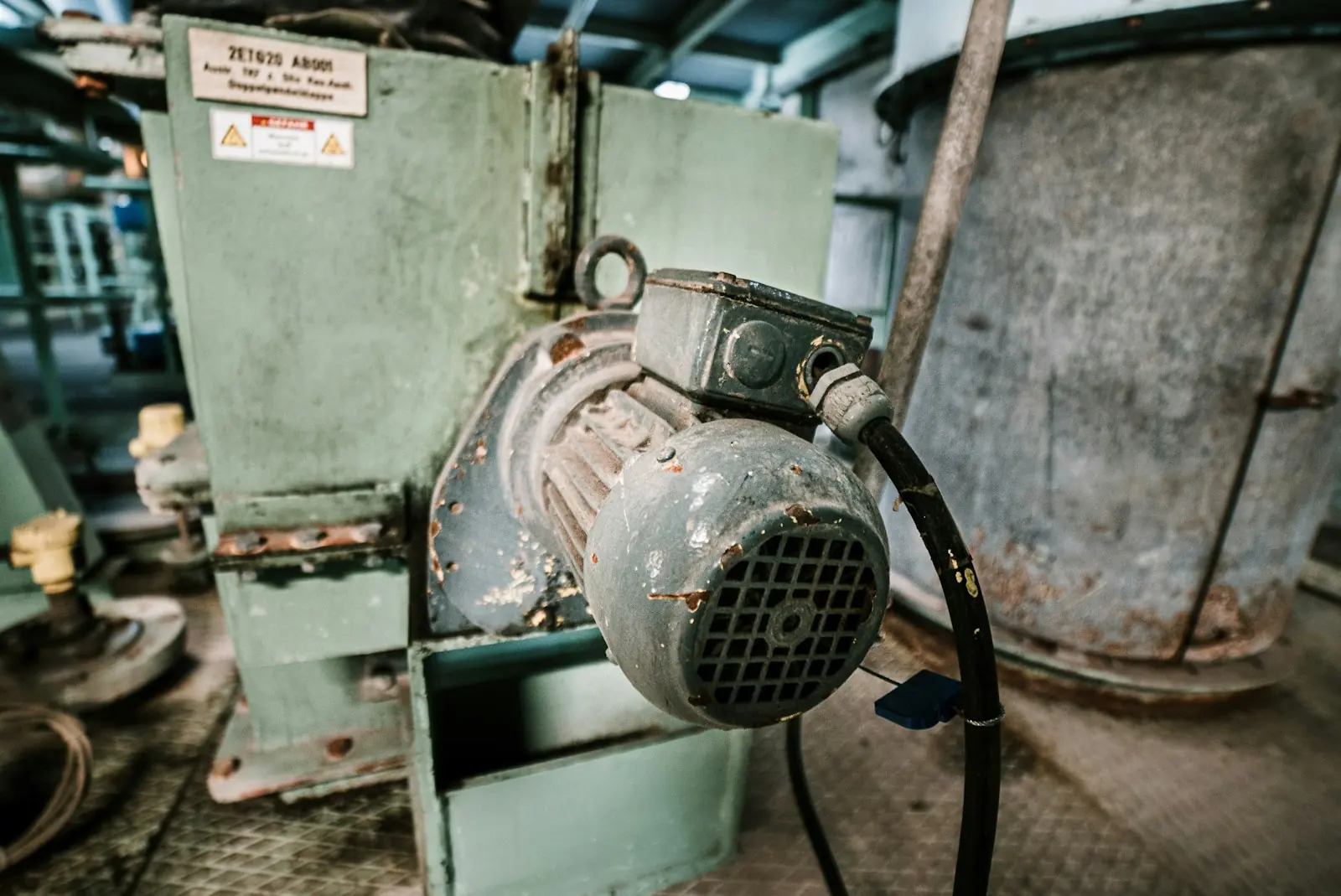
Industrial electric motor in operation
Predictive maintenance · wireless sensors

The machine warns before it breaks. You just need to be listening.

Wireless vibration and temperature sensors on the housing, thermal cameras on the panel, and a platform that compares every reading with ISO 10816 and messages you on WhatsApp when the level changes. Installed without stopping production.

What the platform tracks
Vibration RMSon the X, Y and Z axes, in mm/s
Temperatureof the housing, from the same sensor
FFT spectrumon demand, straight from the dashboard
Thermal patternof panels and bearings, from the camera
Complete solution

Three layers, one point of responsibility.

Sensor, gateway, camera, platform and alert come from the same house that designs and manufactures them. When something fails, there are not three vendors pointing at each other.

Close-up of a rotating motor component

Wireless vibration sensors

Triaxial, with built-in temperature, mounted on the housing with no cabling. They send RMS per axis, peak and dominant frequency to the gateway; the full FFT comes on demand from the dashboard. Firmware updated over the air, no site visit.

Illustrative false-colour thermal image of a motorillustrative image

Thermal cameras

They record the heat pattern of electrical panels, bearings and motors over time. A loose connection, an overloaded phase or friction show up as a hot spot weeks before they turn into the smell of burning.

Operator monitoring machines on the factory floor

Platform and alerts

Every reading is compared with ISO 10816-3 thresholds or with yours. When the level changes, you get an e-mail and a WhatsApp message. Trend estimated with stated reliability, history, audit trail and a dashboard in any browser.

Row of machines on a factory floor
From the sensor on the housing to the notice on your phone, no cabling and no line stop.
How it works

Four steps, none of them interrupts production.

  1. 01

    On the machine

    The wireless sensor goes on the motor housing, bearing or pump. It measures vibration on three axes plus temperature, and talks by radio to the gateway.

  2. 02

    At the 4G gateway

    One gateway per area receives the sensors and sends over the cellular network. With no signal, it stores to an SD card and delivers later. Outside cellular coverage, the same house offers satellite.

  3. 03

    On the platform

    History per axis, temperature, FFT spectrum on demand and comparison of every reading with the sensor thresholds, per ISO 10816-3 or your own.

  4. 04

    On your phone

    When the level changes, an e-mail and a WhatsApp message arrive with sensor, axis, value and threshold. Back to normal, it is logged. The trend tells you how much time you have.

ISO 10816-3

Alert in zone C, alarm in zone D. Only a change of level notifies.

The standard defines vibration ranges by machine size and foundation stiffness. The platform ships with the classes ready; you pick your machine's or set your own limits. A machine hovering at the limit does not fire a notice on every reading: there is hysteresis on the return to normal.

ANew, freshly commissioned
BAcceptable for continuous operation
CUnsatisfactory: alert
DSevere, risk of damage: alarm

Example, Group 2 (15 to 300 kW) on a rigid foundation: alert from 2.8 mm/s and alarm from 4.5 mm/s RMS. Group 1 and flexible foundations have their own limits, all available on the dashboard.

Thermography

Vibration tells the mechanical story. Heat tells the electrical one.

A wearing bearing shows up in vibration. A loose connection in the panel, an overloaded phase or a bearing with friction show up first as heat. The thermal cameras record the asset's temperature pattern at regular intervals, and the platform compares it with the history: a new hot spot is an alert, not a surprise.

  • Electrical panels and busbars
  • Bearings and bearing housings
  • Motors and couplings
  • Transformers and drives

Thermography complements vibration; the camera specification is defined per asset, in the proposal.

Illustrative thermal image of a motor, with temperature scale
illustrative image
Why predictive

Replacing parts by the calendar pays for service life that was still there. Waiting for the breakdown pays for the stopped line.

Corrective (it broke, replace it)Preventive (by the calendar)Predictive (by condition)
When it intervenesAfter the failureOn a fixed date, whether the part is fine or notWhen the measurement shows wear
Production downtimeUnplanned, at the worst momentPlanned, but frequentPlanned, only when needed
PartsCascading damage: what broke and what was next to itReplaces parts with service life leftReplaces at the end of actual service life
What you know about the machineNothing until it stopsThe date of the last replacementVibration, temperature and trend, every day
Frequently asked questions

What people ask before installing.

What does ISO 10816 have to do with my motors?

ISO 10816-3 (now ISO 20816-3) defines acceptable vibration ranges by machine size and foundation type, in mm/s RMS. The platform uses those ranges as default thresholds: zone C raises an alert, zone D raises an alarm. You can change the machine class or set your own limits per sensor.

Do I need to stop the machine to install the sensors?

No. The vibration sensors are wireless, mounted on the housing of the motor, bearing or pump, and talk by radio to a nearby 4G gateway. Installation needs no cabling, no panel work and no production stop.

What about where there is no Wi-Fi or plant network?

The gateway uses the 4G cellular network and stores readings on an SD card when the signal drops, sending everything afterwards. For plants without cellular coverage, the same house offers satellite connectivity.

How does the alert work?

Each reading is compared with the sensor thresholds. Only a change of level triggers a notice, so your inbox is not flooded: entered alert, you are told; entered alarm, you are told; back to normal, it is logged. The notice goes out by e-mail and WhatsApp.

Does the platform predict when the machine will fail?

It estimates. With enough history, it fits the vibration trend and projects when the alarm threshold would be reached, also stating how reliable the estimate is. A wearing bearing accelerates at the end, so we treat the number as an outside deadline, not a fixed date.

What do the thermal cameras add?

Vibration tells the mechanical story; heat tells the electrical and friction story. The cameras record the thermal pattern of panels, bearings and motors over time, and a new hot spot becomes an alert before it becomes downtime.

Interconnected industrial piping
A Data Frontier vertical

Engineering from Belo Horizonte, Brazil. Our own hardware, from design to board.

IoTData is the industrial arm of Data Frontier: the same house that designs the electronics, machines the mechanics and writes the firmware. The sensor is not a catalogue resale, and whoever installs it is whoever built it.

Sensors
Triaxial vibration and temperature, wireless, with OTA
4G gateway
SD-card queue, approval and audit trail on the dashboard
Connectivity
Cellular, and satellite where the network does not reach
data
frontier
Get in touch

Tell us which machines cannot stop. We will tell you what to monitor first.

You will hear back from an engineer, not a bot. Bring the list of critical assets and we will build the proposal on top of it.

Message us on WhatsApp
WhatsApp +55 31 97528-0637Rua da Bahia, 504 — Suite 302 · Belo Horizonte, MG, Brazil
No newsletter. Just the proposal.